
Whole-home renovations · GTA
Permits, inspections, what a written scope should contain and the order the work happens in — the part that does not change between a kitchen, a bathroom and a whole floor.
Free in-home measure. No fee, no obligation.
4.95/5 from 335 HomeStars reviews · award winner 10 years running
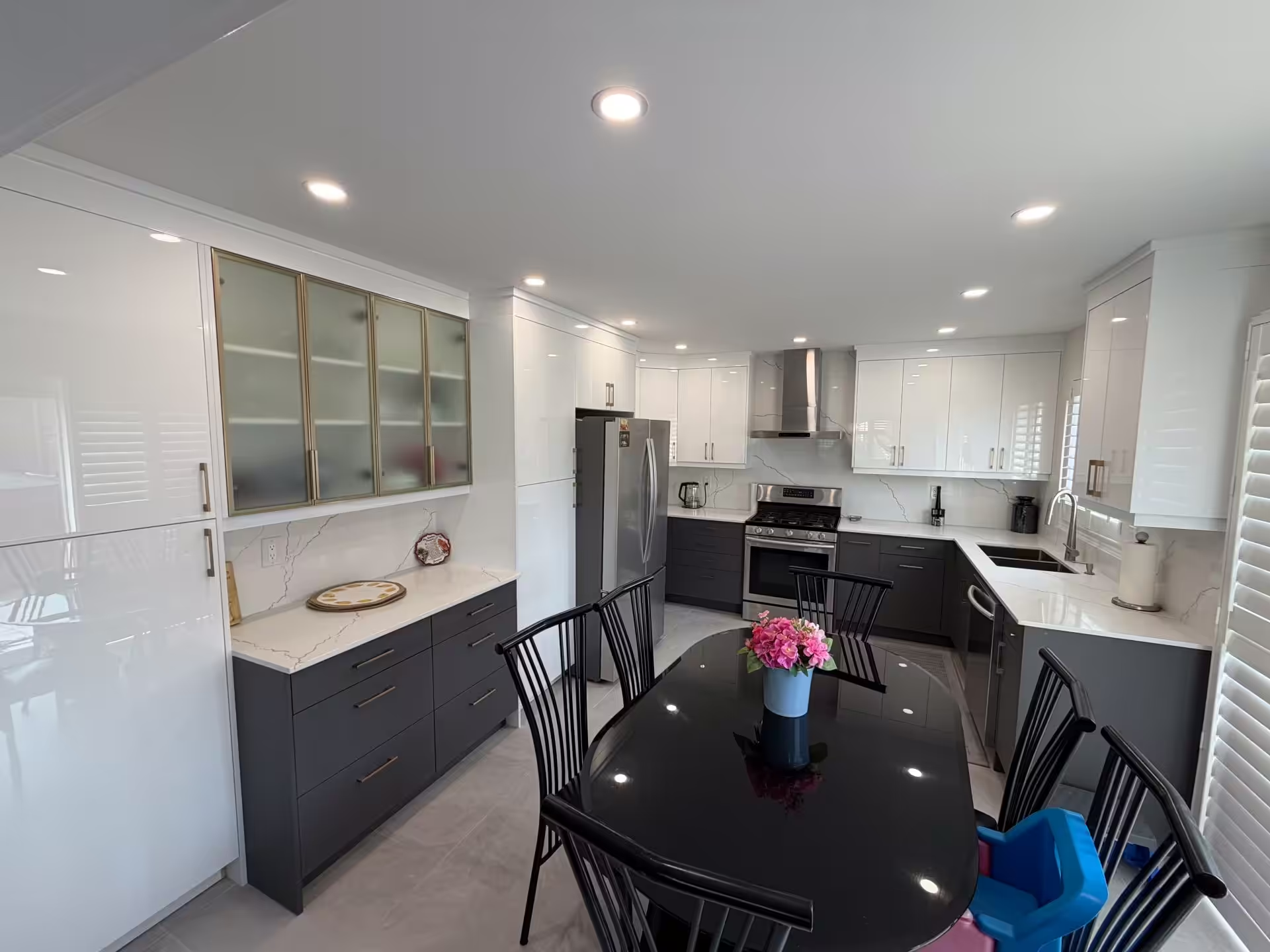


Three things decide how a renovation goes: a written scope agreed before demolition, one company accountable for the whole sequence, and a warranty from whoever did the work. Beyond that the specifics differ by room. This page covers what is common — who issues permits, who inspects the electrical, and the order work happens in — and links to the full guide for kitchens, bathrooms and multi-room projects.
Kitchen renovations Bathroom renovations Whole-home renovations
Whether a specific project needs a permit is a question for your municipality and for the measure. This page describes how the process works, not what any one house requires.
Built for multi-room projects
Most of the expensive problems in a multi-room renovation happen between the trades rather than inside any one of them. When the same company designs, builds and installs every room, there is nobody to point at and nothing to coordinate.
A basement on its own is FinishedBasement.ca’s job — the same team, under the brand that holds the HomeStars record for that work. In a whole-home project you get that crew anyway, because it is the crew that runs these builds.
No fee and no obligation at any point before you have a written quote.
The boring, important part
Ask us for any of it in writing before you sign anything — with us or with anyone else.
The showroom is in Mississauga and the cabinets are built in Woodbridge, but the crews work well past the GTA — Collingwood and Barrie to the north, out to Peterborough and Cobourg in the east, Kitchener and Brantford to the west, and down through Hamilton to Niagara.
Further out across the GTA depending on the size of the project — put your postal code in and we’ll tell you.
Has its own page - tap the pinWithin our service areaHover a town and the van drives there from the showroom.
Kitchens, bathrooms and multi-room projects each have their own guide on this site. This is the part that does not change between them — who issues a permit, who inspects the electrical, what a written scope should contain, and the order the work happens in. It is the same in Mississauga as it is in Whitby.
Building permits are issued by the city or town the house is in, not by us and not by the province. What triggers one is the work rather than the room: structural changes, moving a plumbing stack, and new electrical circuits generally need one; replacing what is already there in the same place generally does not. We handle the application as part of the job. Permit fees are set by the municipality and charged on top of the quote, never buried inside it.
Anything electrical is inspected by the Electrical Safety Authority, which works the same way everywhere in Ontario regardless of which municipality issues the building permit. That is worth knowing because it is the one part of the process that does not change when you cross a city boundary.
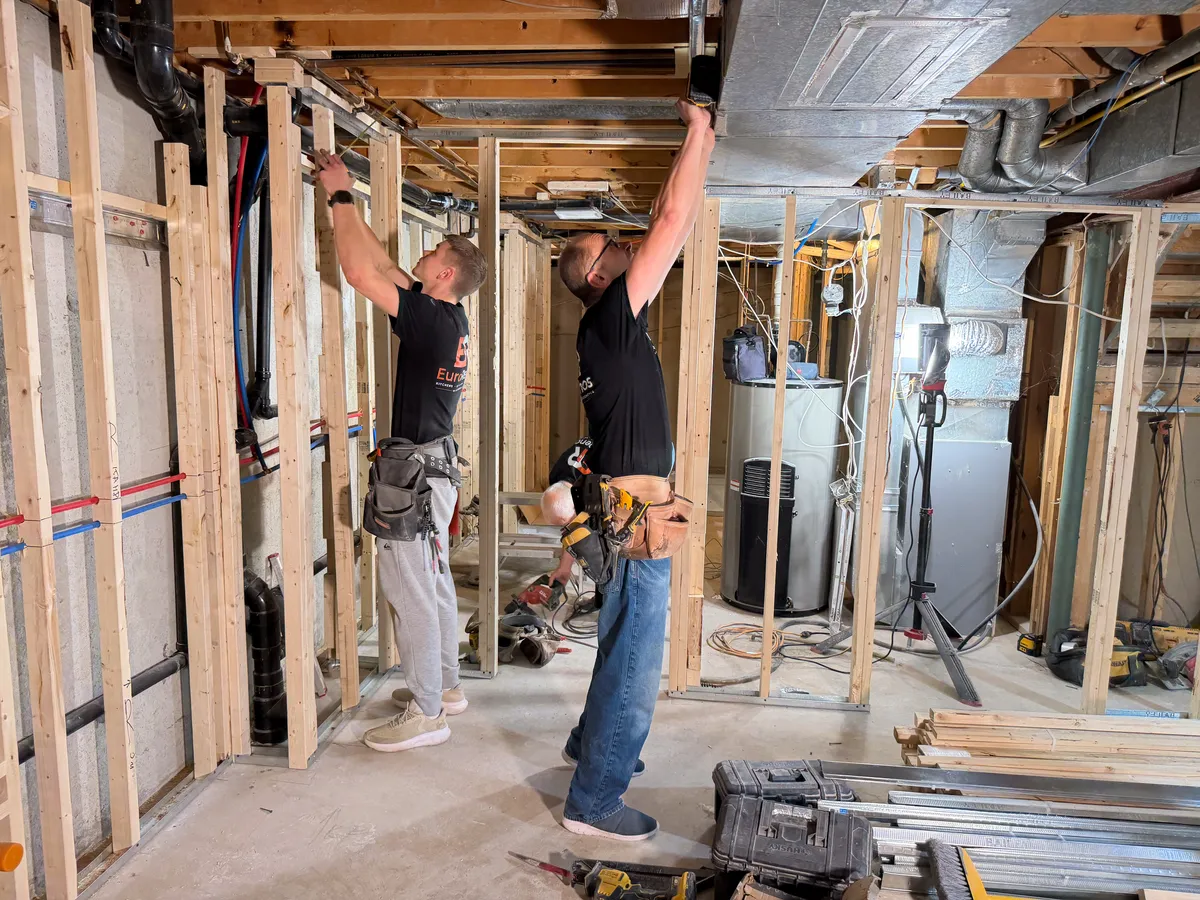
Framing, plumbing and electrical are inspected while they are still visible. That is why a renovation appears to pause at the point where it looks nearly done underneath — closing a wall before it has been signed off means opening it again.
Room by room: what is being removed, what is being installed, which materials and allowances, what is excluded, and what happens when something is discovered behind a wall. If a quote is one number with no itemisation, you cannot compare it with anything — not with ours and not with anyone else's. Ask for the itemised version from everyone you are considering.
Old houses hide things, and the honest position is not that surprises never occur but that they are priced and agreed before the work is done rather than appearing on a final invoice. Ask any renovator how they handle a change order, and listen for whether the answer has a process in it.
Ask whether the people doing the work are the company's own crew or subcontractors met that morning, and ask who is accountable when two trades disagree about whose problem something is. On a job that runs weeks rather than days it is the question that matters most, and it is the one least often asked.